- ISOLATION_DEFAULT (Spring)
This is a PlatformTransactionManager Default isolation level, using Default Database transaction level. The other 4 are correspond to JDBC isolation level - ISOLATION_READ_UNCOMMITTED
Lowest isolation level. Allow other transaction to see the data from this transaction. This level can cause dirty read, non-repeatable read, and illusion read - ISOLATION_READ_COMMITTED (normally used)
Promise other transaction can read data until this transaction committed. - ISOLATION_REPEATABLE_READ
Prevent dirty read, non-repeatable read. But can illusion read. - ISOLATION_SERIALIZABLE
This is most expensive level, but most reliable. It promise Sequence. Prevent dirty read, non-repeatable read, and illusion read
Showing posts with label Hibernate. Show all posts
Showing posts with label Hibernate. Show all posts
Wednesday, April 27, 2016
Spring Transaction Isolation Level
Spring Transaction Isolation Level
The standard levels are 2,3,4,5, the higher level, the poorer concurrency/effi

Transaction Definition
Transaction Definition
- PROPAGATION_REQUIRED (normally used)
If transaction existed, use it, otherwise open a new transaction - PROPAGATION_SUPPORTS
If transaction existed, use it, otherwise run as non-transaction - PROPAGATION_MANDATORY
If transaction existed, use it, otherwise throw Exception - PROPAGATION_REQUIRES_NEW
Always open a new transaction, if transaction existed, hang up the existed transaction - PROPAGATION_NOT_SUPPORTED
Always run without transaction, if transaction existed, hang up the existed transaction - PROPAGATION_NEVER
Always run without transaction, if transaction existed, throw Exception - PROPAGATION_NESTED (in Spring)
If transaction existed, run nested transaction inside the existed transaction.
If no transaction existed, run as PROPAGATION_REQUIRED
| Propagation | T1 None | T1 Existed |
|---|---|---|
| REQUIRED | T2=>new | T1 |
| SUPPORTS | T2 None | T1 |
| MANDATORY | T2 Exception | T1 |
| REQUIRES_NEW | T2=>new | T2=>new |
| NOT_SUPPORTED | None | Hang up T1 |
| NEVER | None | T2 Exception |
| NESTED | As REQUIRED | Nested |
Saturday, April 9, 2016
Spring 3 Hibernate 4 Struts 1.3 Maven
The example project is here:
https://github.com/ylu999/myssh6
1. New Maven Project
groupId: com.gvace
Archetype: org.apache.maven.archetypes
packaging:war
I faced some memory size issue when selecting Archetype, so I increased it in eclipse.ini.

3. pom.xml
4. web.xml
5. applicationContext.xml
6. struts-config.xml
7. ehcache.xml
8. log4j.properties
Without config To get spring application context(Useless):
https://github.com/ylu999/myssh6
1. New Maven Project
groupId: com.gvace
Archetype: org.apache.maven.archetypes
packaging:war
I faced some memory size issue when selecting Archetype, so I increased it in eclipse.ini.
- -Xms512m
- -Xmx1024m
2. Project Structure
<project xmlns="http://maven.apache.org/POM/4.0.0" xmlns:xsi="http://www.w3.org/2001/XMLSchema-instance"
 xsi:schemaLocation="http://maven.apache.org/POM/4.0.0 http://maven.apache.org/maven-v4_0_0.xsd">
 <modelVersion>4.0.0</modelVersion>
 <groupId>com.gvace</groupId>
 <artifactId>myssh6</artifactId>
 <packaging>war</packaging>
 <version>0.0.1-SNAPSHOT</version>
 <name>myssh6 Maven Webapp</name>
 <url>http://maven.apache.org</url>
 <properties>
  <project.build.sourceEncoding>UTF-8</project.build.sourceEncoding>
  <project.build.mainClass>com.gvace.main</project.build.mainClass>
  <java.version>1.7</java.version>
  <spring.version>3.2.16.RELEASE</spring.version>
  <hibernate.version>4.1.7.Final</hibernate.version>
 </properties>
 <dependencies>
  <dependency>
   <groupId>javax.servlet</groupId>
   <artifactId>servlet-api</artifactId>
   <version>2.5</version>
   <scope>provided</scope>
  </dependency>
  <dependency>
   <groupId>javax.annotation</groupId>
   <artifactId>javax.annotation-api</artifactId>
   <version>1.2</version>
  </dependency>
  <dependency>
   <groupId>org.springframework</groupId>
   <artifactId>spring-context</artifactId>
   <version>${spring.version}</version>
  </dependency>

  <dependency>
   <groupId>org.springframework</groupId>
   <artifactId>spring-orm</artifactId>
   <version>${spring.version}</version>
  </dependency>

  <dependency>
   <groupId>org.springframework</groupId>
   <artifactId>spring-aop</artifactId>
   <version>${spring.version}</version>
  </dependency>
  <dependency>
   <groupId>org.springframework</groupId>
   <artifactId>spring-context-support</artifactId>
   <version>${spring.version}</version>
  </dependency>
  <!-- Spring Struts -->
  <dependency>
   <groupId>org.springframework</groupId>
   <artifactId>spring-struts</artifactId>
   <version>${spring.version}</version>
  </dependency>

  <!--@Transactional -->
  <dependency>
   <groupId>org.springframework</groupId>
   <artifactId>spring-tx</artifactId>
   <version>${spring.version}</version>
  </dependency>
  <dependency>
   <groupId>org.springframework</groupId>
   <artifactId>spring-web</artifactId>
   <version>${spring.version}</version>
  </dependency>

  <dependency>
   <groupId>org.hibernate</groupId>
   <artifactId>hibernate-entitymanager</artifactId>
   <version>${hibernate.version}</version>
  </dependency>
  <!-- <dependency> <groupId>org.hibernate</groupId> <artifactId>hibernate-search</artifactId>
   <version>4.1.1.Final</version> </dependency> -->
  <dependency>
   <groupId>org.hibernate</groupId>
   <artifactId>hibernate-ehcache</artifactId>
   <version>${hibernate.version}</version>
  </dependency>
  <dependency>
   <groupId>net.sf.ehcache</groupId>
   <artifactId>ehcache-core</artifactId>
   <version>2.6.5</version>
  </dependency>
  <!-- connection pooling with c3p0 -->
  <dependency>
   <groupId>c3p0</groupId>
   <artifactId>c3p0</artifactId>
   <version>0.9.1.2</version>
  </dependency>

  <dependency>
   <groupId>log4j</groupId>
   <artifactId>log4j</artifactId>
   <version>1.2.17</version>
  </dependency>

  <dependency>
   <groupId>mysql</groupId>
   <artifactId>mysql-connector-java</artifactId>
   <version>5.1.38</version>
  </dependency>

  <dependency>
   <groupId>junit</groupId>
   <artifactId>junit</artifactId>
   <version>4.12</version>
   <scope>test</scope>
  </dependency>

  <dependency>
   <groupId>cglib</groupId>
   <artifactId>cglib</artifactId>
   <version>3.1</version>
  </dependency>

  <dependency>
   <groupId>org.springframework</groupId>
   <artifactId>spring-test</artifactId>
   <version>${spring.version}</version>
   <scope>test</scope>
  </dependency>
  <dependency>
   <groupId>org.slf4j</groupId>
   <artifactId>slf4j-api</artifactId>
   <version>1.7.20</version>
  </dependency>
  <dependency>
   <groupId>org.slf4j</groupId>
   <artifactId>slf4j-simple</artifactId>
   <version>1.7.20</version>
  </dependency>

  <!-- Struts 1.3 -->
  <dependency>
   <groupId>antlr</groupId>
   <artifactId>antlr</artifactId>
   <version>2.7.7</version>
  </dependency>
  <dependency>
   <groupId>bsf</groupId>
   <artifactId>bsf</artifactId>
   <version>2.3.0</version>
  </dependency>
  <dependency>
   <groupId>commons-beanutils</groupId>
   <artifactId>commons-beanutils</artifactId>
   <version>1.9.2</version>
  </dependency>
  <dependency>
   <groupId>commons-chain</groupId>
   <artifactId>commons-chain</artifactId>
   <version>1.2</version>
  </dependency>
  <dependency>
   <groupId>commons-digester</groupId>
   <artifactId>commons-digester</artifactId>
   <version>1.8.1</version>
  </dependency>
  <dependency>
   <groupId>commons-fileupload</groupId>
   <artifactId>commons-fileupload</artifactId>
   <version>1.1.1</version>
  </dependency>
  <dependency>
   <groupId>commons-io</groupId>
   <artifactId>commons-io</artifactId>
   <version>1.1</version>
  </dependency>
  <dependency>
   <groupId>commons-logging</groupId>
   <artifactId>commons-logging</artifactId>
   <version>1.0.4</version>
  </dependency>
  <dependency>
   <groupId>commons-validator</groupId>
   <artifactId>commons-validator</artifactId>
   <version>1.3.1</version>
  </dependency>
  <dependency>
   <groupId>commons-dbcp</groupId>
   <artifactId>commons-dbcp</artifactId>
   <version>1.2.2</version>
  </dependency>

  <dependency>
   <groupId>oro</groupId>
   <artifactId>oro</artifactId>
   <version>2.0.8</version>
  </dependency>
  <dependency>
   <groupId>javax.servlet</groupId>
   <artifactId>jstl</artifactId>
   <version>1.2</version>
  </dependency>
  <dependency>
   <groupId>org.apache.taglibs</groupId>
   <artifactId>taglibs-standard-impl</artifactId>
   <version>1.2.5</version>
  </dependency>
  <dependency>
   <groupId>org.apache.struts</groupId>
   <artifactId>struts-core</artifactId>
   <version>1.3.10</version>
  </dependency>
  <dependency>
   <groupId>org.apache.struts</groupId>
   <artifactId>struts-el</artifactId>
   <version>1.3.10</version>
  </dependency>
  <dependency>
   <groupId>org.apache.struts</groupId>
   <artifactId>struts-extras</artifactId>
   <version>1.3.10</version>
  </dependency>
  <dependency>
   <groupId>org.apache.struts</groupId>
   <artifactId>struts-faces</artifactId>
   <version>1.3.10</version>
  </dependency>
  <dependency>
   <groupId>org.apache.struts</groupId>
   <artifactId>struts-mailreader-dao</artifactId>
   <version>1.3.10</version>
  </dependency>
  <dependency>
   <groupId>org.apache.struts</groupId>
   <artifactId>struts-scripting</artifactId>
   <version>1.3.10</version>
  </dependency>
  <dependency>
   <groupId>org.apache.struts</groupId>
   <artifactId>struts-taglib</artifactId>
   <version>1.3.10</version>
  </dependency>
  <dependency>
   <groupId>org.apache.struts</groupId>
   <artifactId>struts-tiles</artifactId>
   <version>1.3.10</version>
  </dependency>
  <!-- -->
 </dependencies>
 <build>
  <finalName>myssh6</finalName>
 </build>
</project>
4. web.xml
<?xml version="1.0" encoding="UTF-8"?>
<web-app xmlns:xsi="http://www.w3.org/2001/XMLSchema-instance"
 xmlns="http://java.sun.com/xml/ns/javaee" xmlns:web="http://java.sun.com/xml/ns/javaee/web-app_2_5.xsd"
 xsi:schemaLocation="http://java.sun.com/xml/ns/javaee http://java.sun.com/xml/ns/javaee/web-app_3_0.xsd"
 id="WebApp_ID" version="3.0">
 <display-name>myssh6</display-name>
 <welcome-file-list>
  <welcome-file>index.html</welcome-file>
  <welcome-file>index.htm</welcome-file>
  <welcome-file>index.jsp</welcome-file>
  <welcome-file>default.html</welcome-file>
  <welcome-file>default.htm</welcome-file>
  <welcome-file>default.jsp</welcome-file>
 </welcome-file-list>

 <!-- Spring config
  classpath: starts from src folder
  -->
    <context-param>
        <param-name>contextConfigLocation</param-name>
        <!-- <param-value>/WEB-INF/applicationContext.xml</param-value> -->
        <param-value>classpath:applicationContext.xml</param-value>
    </context-param>
    <!-- Initialize Spring Container -->
    <listener>
        <listener-class>org.springframework.web.context.ContextLoaderListener</listener-class>
    </listener>

    <!-- Struts -->
 <servlet>
  <servlet-name>struts</servlet-name>
  <servlet-class>org.apache.struts.action.ActionServlet</servlet-class>
  <load-on-startup>2</load-on-startup>
 </servlet>
 <servlet-mapping>
  <servlet-name>struts</servlet-name>
  <url-pattern>*.do</url-pattern>
 </servlet-mapping>
 <!-- Encoding with spring filter -->
 <filter>
  <filter-name>encoding</filter-name>
  <filter-class>org.springframework.web.filter.CharacterEncodingFilter</filter-class>
  <init-param>
   <param-name>encoding</param-name>
   <param-value>UTF-8</param-value>
  </init-param>
 </filter>
 <filter-mapping>
  <filter-name>encoding</filter-name>
  <url-pattern>/*</url-pattern>
 </filter-mapping>
</web-app>
5. applicationContext.xml
<?xml version="1.0" encoding="UTF-8"?>
<beans xmlns="http://www.springframework.org/schema/beans"
 xmlns:xsi="http://www.w3.org/2001/XMLSchema-instance" xmlns:context="http://www.springframework.org/schema/context"
 xmlns:tx="http://www.springframework.org/schema/tx"
 xsi:schemaLocation="http://www.springframework.org/schema/beans http://www.springframework.org/schema/beans/spring-beans-2.5.xsd
    http://www.springframework.org/schema/context http://www.springframework.org/schema/context/spring-context-2.5.xsd
    http://www.springframework.org/schema/tx http://www.springframework.org/schema/tx/spring-tx-2.5.xsd"
 >
 <!-- Enable Annotation -->
 <context:annotation-config/>
 <!-- Data Source -->
 <bean id="dataSource" class="org.apache.commons.dbcp.BasicDataSource" destroy-method="close">
  <property name="driverClassName" value="com.mysql.jdbc.Driver"/>
    <property name="url" value="jdbc:mysql://localhost:3306/myssh"/>
  <property name="username" value="root"/>
    <property name="password" value="root"/>
    <property name="initialSize" value="3"/>
    <property name="maxActive" value="500"/>
    <property name="maxIdle" value="2"/>
    <property name="minIdle" value="1"/>
 </bean>

 <!--Spring Cache-->
 <!--
    <bean id="cacheManager" class="org.springframework.cache.support.SimpleCacheManager">
        <property name="caches">
            <set>
                <bean class="org.springframework.cache.concurrent.ConcurrentMapCacheFactoryBean" />
            </set>
        </property>
    </bean>
    -->
 <!-- Local Session Factory Bean -->
 <bean id="sessionFactory" class="org.springframework.orm.hibernate4.LocalSessionFactoryBean">
  <property name="dataSource" ref="dataSource"/>
  <property name="mappingResources">
   <list>
    <value>hbm/Employee.hbm.xml</value>
    <value>hbm/Department.hbm.xml</value>
   </list>
  </property>
  <property name="hibernateProperties">
   <value>
    hibernate.hbm2ddl.auto=update

    hibernate.dialect=org.hibernate.dialect.MySQLDialect
    hibernate.show_sql=true
    hibernate.format_sql=true

    hibernate.connection.CharSet=utf8
    hibernate.connection.characterEncoding=utf8
    hibernate.connection.useUnicode=true

    hibernate.generate_statistics=true
    hibernate.cache.use_structured_entries=true
    hibernate.cache.use_second_level_cache=true
    hibernate.cache.use_query_cache=true
    hibernate.cache.region.factory_class=org.hibernate.cache.ehcache.EhCacheRegionFactory
    net.sf.ehcache.configurationResourceName=/ehcache.xml
   </value>
  </property>
 </bean>
 <!-- Spring Transaction Manager -->
 <bean id="transactionManager" class="org.springframework.orm.hibernate4.HibernateTransactionManager">
  <property name="sessionFactory" ref="sessionFactory"></property>
 </bean>
 <!-- Start Transaction Annotation -->
 <tx:annotation-driven transaction-manager="transactionManager"/>

 <!-- Service Beans -->
 <bean id="employeeService" class="com.gvace.service.impl.EmployeeService">
  <!-- try annotation @Resource instead of here -->
  <!-- <property name="sessionFactory" ref="sessionFactory"/> -->
 </bean>
 <!-- Action
  set name with the action->path configured in struts-config.xml
  then you can delete the type property configured in struts-config.xml for this Action
  because we already set the class here
 -->
 <bean name="/login" class="com.gvace.web.action.LoginAction">
  <!-- add dependency of employeeServiceInterface -->
  <!-- try annotation @Resource instead of here -->
  <!-- <property name="employeeService" ref="employeeService"></property> -->
 </bean>
</beans>
6. struts-config.xml
<?xml version="1.0" encoding="UTF-8"?>
<!DOCTYPE struts-config PUBLIC "-//Apache Software Foundation//DTD Struts Configuration 1.3//EN"
       "http://struts.apache.org/dtds/struts-config_1_3.dtd">
<struts-config>
 <form-beans>
  <form-bean name="loginForm" type="com.gvace.web.form.LoginForm"></form-bean>
 </form-beans>
 <action-mappings>
  <!-- localhost:8080/webapp/login.do, action path is the requested url path -->
  <!-- form-bean connect to the action identified by name -->
  <action path="/login" parameter="r" scope="request" name="loginForm"><!-- deleted type property since we have spring -->
   <!-- action choose which forward to go by forward name -->
   <forward name="ok" path="/WEB-INF/main.jsp"></forward>
   <forward name="err" path="/WEB-INF/err.jsp"></forward>
  </action>
 </action-mappings>
 <!-- set Proxy for the request control: DelegatingRequestProcessor -->
 <controller>
  <set-property property="processorClass" value="org.springframework.web.struts.DelegatingRequestProcessor"/>
 </controller>
</struts-config>
7. ehcache.xml
<?xml version="1.0" encoding="UTF-8"?>
<ehcache xmlns:xsi="http://www.w3.org/2001/XMLSchema-instance"
    xsi:noNamespaceSchemaLocation="ehcache.xsd" updateCheck="true"
    monitoring="autodetect" dynamicConfig="true">

    <diskStore path="java.io.tmpdir/ehcache" />

    <defaultCache maxEntriesLocalHeap="10000" eternal="false"
        timeToIdleSeconds="120" timeToLiveSeconds="120" diskSpoolBufferSizeMB="30"
        maxEntriesLocalDisk="10000000" diskExpiryThreadIntervalSeconds="120"
        memoryStoreEvictionPolicy="LRU" statistics="true">
        <persistence strategy="localTempSwap" />
    </defaultCache>
 <!--
    <cache name="employee" maxEntriesLocalHeap="10000" eternal="false"
        timeToIdleSeconds="5" timeToLiveSeconds="10">
        <persistence strategy="localTempSwap" />
    </cache>
  -->
    <cache name="org.hibernate.cache.internal.StandardQueryCache"
        maxEntriesLocalHeap="5" eternal="false" timeToLiveSeconds="120">
        <persistence strategy="localTempSwap" />
    </cache>

    <cache name="org.hibernate.cache.spi.UpdateTimestampsCache"
        maxEntriesLocalHeap="5000" eternal="true">
        <persistence strategy="localTempSwap" />
    </cache>
</ehcache>
8. log4j.properties
# Root logger option
log4j.rootLogger=INFO, file, stdout

# Direct log messages to a log file
log4j.appender.file=org.apache.log4j.RollingFileAppender
log4j.appender.file.File=/home/yushan/javalog/logging.log
log4j.appender.file.MaxFileSize=10MB
log4j.appender.file.MaxBackupIndex=10
log4j.appender.file.layout=org.apache.log4j.PatternLayout
log4j.appender.file.layout.ConversionPattern=%d{yyyy-MM-dd HH:mm:ss} %-5p %c{1}:%L - %m%n

# Direct log messages to stdout
log4j.appender.stdout=org.apache.log4j.ConsoleAppender
log4j.appender.stdout.Target=System.out
log4j.appender.stdout.layout=org.apache.log4j.PatternLayout
log4j.appender.stdout.layout.ConversionPattern=%d{yyyy-MM-dd HH:mm:ss} %-5p %c{1}:%L - %m%n
Without config To get spring application context(Useless):
WebApplicationContext context = WebApplicationContextUtils.getWebApplicationContext(this.getServlet().getServletContext());
Sunday, April 3, 2016
Spring 3 + Hibernate 4 config
I faced some dependency issue:
Could not load requested class : org.hibernate.cache.ehcache.EhCacheRegionFactory
Thanks to
http://stackoverflow.com/questions/11905722/java-lang-noclassdeffounderror-org-hibernate-cache-entityregion-configuring-ehc
and its reference
http://web.archive.org/web/20130117102553/http://www.javacraft.org/2012/03/migrate-to-hibernate-4-ehcache.html
pom.xml
<project xmlns="http://maven.apache.org/POM/4.0.0" xmlns:xsi="http://www.w3.org/2001/XMLSchema-instance"
 xsi:schemaLocation="http://maven.apache.org/POM/4.0.0 http://maven.apache.org/xsd/maven-4.0.0.xsd">
 <modelVersion>4.0.0</modelVersion>
 <groupId>myssh</groupId>
 <artifactId>myssh</artifactId>
 <version>0.0.1-SNAPSHOT</version>
 <packaging>war</packaging>
 <properties>
  <project.build.sourceEncoding>UTF-8</project.build.sourceEncoding>
  <project.build.mainClass>com.gvace.main</project.build.mainClass>
  <java.version>1.7</java.version>
  <spring.version>3.2.16.RELEASE</spring.version>
  <hibernate.version>4.1.7.Final</hibernate.version>

 </properties>
 <dependencies>

  <dependency>
   <groupId>org.springframework</groupId>
   <artifactId>spring-context</artifactId>
   <version>${spring.version}</version>
  </dependency>

  <dependency>
   <groupId>org.springframework</groupId>
   <artifactId>spring-orm</artifactId>
   <version>${spring.version}</version>
  </dependency>

  <dependency>
   <groupId>org.springframework</groupId>
   <artifactId>spring-aop</artifactId>
   <version>${spring.version}</version>
  </dependency>
  <!--@Transactional -->
  <dependency>
   <groupId>org.springframework</groupId>
   <artifactId>spring-tx</artifactId>
   <version>${spring.version}</version>
  </dependency>

  <dependency>
   <groupId>org.hibernate</groupId>
   <artifactId>hibernate-entitymanager</artifactId>
   <version>${hibernate.version}</version>
  </dependency>
  <!--
  <dependency>
   <groupId>org.hibernate</groupId>
   <artifactId>hibernate-search</artifactId>
   <version>4.1.1.Final</version>
  </dependency>
   -->
     <dependency>
       <groupId>org.hibernate</groupId>
       <artifactId>hibernate-ehcache</artifactId>
       <version>${hibernate.version}</version>
     </dependency>
  <!-- connection pooling with c3p0 -->
  <dependency>
   <groupId>c3p0</groupId>
   <artifactId>c3p0</artifactId>
   <version>0.9.1.2</version>
  </dependency>

  <dependency>
   <groupId>log4j</groupId>
   <artifactId>log4j</artifactId>
   <version>1.2.17</version>
  </dependency>

  <dependency>
   <groupId>mysql</groupId>
   <artifactId>mysql-connector-java</artifactId>
   <version>5.1.38</version>
  </dependency>

  <dependency>
   <groupId>junit</groupId>
   <artifactId>junit</artifactId>
   <version>4.12</version>
   <scope>test</scope>
  </dependency>

  <dependency>
   <groupId>cglib</groupId>
   <artifactId>cglib</artifactId>
   <version>3.1</version>
  </dependency>

  <dependency>
   <groupId>org.springframework</groupId>
   <artifactId>spring-test</artifactId>
   <version>${spring.version}</version>
   <scope>test</scope>
  </dependency>
    <dependency>
        <groupId>org.slf4j</groupId>
        <artifactId>slf4j-api</artifactId>
        <version>1.7.20</version>
    </dependency>
    <dependency>
        <groupId>org.slf4j</groupId>
        <artifactId>slf4j-simple</artifactId>
        <version>1.7.20</version>
    </dependency>
 </dependencies>
</project>
applicationContext.xml
<?xml version="1.0" encoding="UTF-8"?>
<beans xmlns="http://www.springframework.org/schema/beans"
 xmlns:xsi="http://www.w3.org/2001/XMLSchema-instance" xmlns:context="http://www.springframework.org/schema/context"
 xmlns:tx="http://www.springframework.org/schema/tx"
 xsi:schemaLocation="http://www.springframework.org/schema/beans http://www.springframework.org/schema/beans/spring-beans-2.5.xsd
    http://www.springframework.org/schema/context http://www.springframework.org/schema/context/spring-context-2.5.xsd
    http://www.springframework.org/schema/tx http://www.springframework.org/schema/tx/spring-tx-2.5.xsd"
 >
 <!-- Data Source -->
 <bean id="dataSource" class="org.apache.commons.dbcp.BasicDataSource" destroy-method="close">
  <property name="driverClassName" value="com.mysql.jdbc.Driver"/>
    <property name="url" value="jdbc:mysql://localhost:3306/myssh"/>
  <property name="username" value="root"/>
    <property name="password" value="root"/>
    <property name="initialSize" value="3"/>
    <property name="maxActive" value="500"/>
    <property name="maxIdle" value="2"/>
    <property name="minIdle" value="1"/>
 </bean>

 <!--Spring Cache--><!--
    <bean id="cacheManager" class="org.springframework.cache.support.SimpleCacheManager">
        <property name="caches">
            <set>
                <bean class="org.springframework.cache.concurrent.ConcurrentMapCacheFactoryBean" />
            </set>
        </property>
    </bean>
-->
 <!-- Local Session Factory Bean -->
 <bean id="sessionFactory" class="org.springframework.orm.hibernate4.LocalSessionFactoryBean">
  <property name="dataSource" ref="dataSource"/>
  <property name="mappingResources">
   <list>
    <value>com/gvace/domain/Employee.hbm.xml</value>
   </list>
  </property>
  <property name="hibernateProperties">
   <value>
    hibernate.hbm2ddl.auto=update

    hibernate.dialect=org.hibernate.dialect.MySQLDialect
    hibernate.show_sql=true
    hibernate.format_sql=true

    hibernate.connection.CharSet=utf8
    hibernate.connection.characterEncoding=utf8
    hibernate.connection.useUnicode=true

    hibernate.generate_statistics=true
    hibernate.cache.region.factory_class=org.hibernate.cache.ehcache.EhCacheRegionFactory
    hibernate.cache.use_structured_entries=true
    hibernate.cache.use_second_level_cache=true
    hibernate.cache.use_query_cache=true
   </value>
  </property>
 </bean>
 <!-- Spring Transaction Manager -->
 <bean id="transactionManager" class="org.springframework.orm.hibernate4.HibernateTransactionManager">
  <property name="sessionFactory" ref="sessionFactory"></property>
 </bean>
 <!-- Start Transaction Annotation -->
 <tx:annotation-driven transaction-manager="transactionManager"/>

 <!-- Service Beans -->
 <bean id="employeeService" class="com.gvace.service.impl.EmployeeService">
  <property name="sessionFactory" ref="sessionFactory"/>
 </bean>
</beans>
Sunday, March 20, 2016
Hibernate Cache
Session Cache(1st Level Cache)
1st Level Cache will be pushed during the following functions:
save, update, saveOrUpdate, load, get, list, iterate, lock
1st Level Cache will be loaded during the following functions:
get, load
1st Level Cache cleanning
default enabled, will not auto clean, so do cleaning manually
Example:
session.evict(student); //remove this instance from 1st level cache
session.clear(); //completely clear all instances from the session
Cache Life cycle
All instances will be purged when session closed.
SessionFactory Cache(2st Level Cache)
Stay with SessionFactory, so it's longer than 1st Level.
Has different third-party implementations.
EHCache Example
hibernate.cfg.xml
ehcache.xml
Optional, customize configs for each model/POJO/domain
2nd Level Cache Statistics
To generate statistics of cache for 2nd Level Cache
Get statics like follows:
Useful statistics
second level cache puts=10
second level cache hits=0
second level cache misses=0
1st Level Cache will be pushed during the following functions:
save, update, saveOrUpdate, load, get, list, iterate, lock
1st Level Cache will be loaded during the following functions:
get, load
1st Level Cache cleanning
default enabled, will not auto clean, so do cleaning manually
Example:
session.evict(student); //remove this instance from 1st level cache
session.clear(); //completely clear all instances from the session
Cache Life cycle
All instances will be purged when session closed.
SessionFactory Cache(2st Level Cache)
Stay with SessionFactory, so it's longer than 1st Level.
Has different third-party implementations.
Cache name
|
Cache Type | Provider class |
Hashtable
|
Memory | Org.hibernate.cache.HashtableCacheProvider |
EHCache
|
Memory, hard drive | Org.hibernate.cache.EhCacheProvider |
OSCache(out of maintain)
|
Memory, hard drive | Org.hibernate.cache.OSCacheProvider |
SwarmCache
|
distributed (no distributed transaction) |
Org.hibernate.cache.SwarmCacheProvider |
JBoss
Cache 1.x
|
distributed (distributed transaction) |
Org.hibernate.cache.TreeCacheProvider |
JBoss
Cache 2
|
distributed (distributed transaction) |
Org.hibernate.cache.JBossCacheRegionFactory |
Four usage
1. Use in hibernate.cfg.xml: <class-cache usage="read-write">
2. Use in each *.hbm.xml <cache usage="read-write">
read-only
read-write
nonstrict-read-write
transactional
EHCache Example
hibernate.cfg.xml
  <property name="hibernate.generate_statistics">true</property>
  <property name="hibernate.cache.use_structured_entries">true</property>
  <property name="hibernate.cache.use_second_level_cache">true</property>
  <property name="hibernate.cache.use_query_cache">true</property>
  <property name="hibernate.cache.region.factory_class">org.hibernate.cache.ehcache.EhCacheRegionFactory</property>

  <mapping resource="com/gvace/notebook/domain/User.hbm.xml"/>
  <mapping resource="com/gvace/notebook/domain/Message.hbm.xml"/>

  <class-cache usage="read-write" class="com.gvace.notebook.domain.User"/>
  <class-cache usage="read-write" class="com.gvace.notebook.domain.Message"/>
-----------------------------------------------------
ehcache.xml
Optional, customize configs for each model/POJO/domain
2nd Level Cache Statistics
To generate statistics of cache for 2nd Level Cache
<property name="hibernate.generate_statistics">true</property>
Get statics like follows:
SessionFactory sessionFactory = HibernateUtil.getSessionFactory();
System.out.println("AAa"+sessionFactory.getStatistics());
Useful statistics
second level cache puts=10
second level cache hits=0
second level cache misses=0
Friday, March 18, 2016
Hibernate Lazy
Lazy: load on demand
Return proxy instead of target object, so load query when you call get functions.
Proxy example:
One-to-one object: HibernateProxy
Set: PersistentSet
So object MUST NOT set as final.
Hibernate default is lazy="true", this will cause error when you use related object when session is already closed.
If set a lot lazy="false", a lot unnecessary query will run, which cause a waste.
Solutions:
2. Hibernate.initialize during the session.
3. Config hbm.xml
In many-to-one(many side), if set the class to lazy="false"
4. openSessionInView
Set lazy="true"(or just do not set lazy mode)
Return proxy instead of target object, so load query when you call get functions.
Proxy example:
One-to-one object: HibernateProxy
Set: PersistentSet
So object MUST NOT set as final.
Hibernate default is lazy="true", this will cause error when you use related object when session is already closed.
If set a lot lazy="false", a lot unnecessary query will run, which cause a waste.
Solutions:
- Hibernate.initialize
- config in hbm.xml, lazy=false
- Web filter, openSessionInView
openSessionInView is better than others, since you don't know if you really loading related object or not. All we do just extend life cycle of session.
1. call getXX() function during the session
2. Hibernate.initialize during the session.
Hibernate.initialize(xxx);
//xxx is the property: obj.getXXX()
3. Config hbm.xml
In many-to-one(many side), if set the class to lazy="false"
Hibernate will use left outer join to load related data with the original data in one time.
In one-to-many(one side), if set the set to lazy="false"
Hibernate will first load the object list, then load ALL related objects from separate query for each object.
4. openSessionInView
Set lazy="true"(or just do not set lazy mode)
Make the query session alive, starts from the web filter, until jump out from the web filter.
All hibernate usage then REQUIRED to use getCurrentSession!
And also DONOT close session other than in this filter
This will make session stay open for longer time.
Filter:
for Spring, use Spring provided OpenSessionInViewFilter:
Or make filter your self:
All hibernate usage then REQUIRED to use getCurrentSession!
And also DONOT close session other than in this filter
This will make session stay open for longer time.
Filter:
for Spring, use Spring provided OpenSessionInViewFilter:
 <!-- OpenSessionInView with spring filter -->
 <filter>
  <filter-name>openSessionInViewFilter</filter-name>
  <filter-class>org.springframework.orm.hibernate4.support.OpenSessionInViewFilter</filter-class>
 </filter>
 <filter-mapping>
  <filter-name>openSessionInViewFilter</filter-name>
  <url-pattern>/*</url-pattern>
 </filter-mapping>
Or make filter your self:
public class HibernateSessionFilter extends HttpServlet implements Filter {

 @Override
 public void doFilter(ServletRequest request, ServletResponse response,
   FilterChain chain) throws IOException, ServletException {
  Session session = null;
  Transaction tx = null;
  try {
   session = HibernateUtil.getCurrentSession();
   tx = session.beginTransaction();
   chain.doFilter(request, response);
   tx.commit();
  } catch (Exception e) {
   if(tx!=null)tx.rollback();
   throw new RuntimeException(e.getMessage());
  } finally {
   HibernateUtil.closeCurrentSession();
  }

 }

 @Override
 public void init(FilterConfig filterConfig) throws ServletException {

 }

}
Issues for 1 and 2
hard to know when to pre-load, and when to not-pre-load.
If set to pre-load: may waste unnecessary querys
If set to not-pre-load: will cause error when getting related property
hard to know when to pre-load, and when to not-pre-load.
If set to pre-load: may waste unnecessary querys
If set to not-pre-load: will cause error when getting related property
Wednesday, March 9, 2016
Hibernate Cascade
Transitive Persistence
Normally used to <one-to-many> and <one-to-one>: "one" side
Not suggest for <many-to-one> and <many-to-many>: "many" side
Normally used to <one-to-many> and <one-to-one>: "one" side
Not suggest for <many-to-one> and <many-to-many>: "many" side
- Can used in <Set> and also <Property>
- Used in <one-to-many>, "one" side
- Used in <one-to-one>, primary object side
Cascade options:
none
all
save-update:
delete
lock
refresh
evict
replicate
persist
merge
delete-orphan(one-to-many)
Examples:
cascade="all"
cascade="persist,merge,save-update"
cascade="delete"
Example:(one-to-many)
Auto delete students when delete a department.
in Department.hbm.xml
<set name="students" cascade="delete">
<key column="dept_id"/>
<one-to-many class="student" />
</set>
when doing delete a department, all students in its <set> will be deleted
Example:(one-to-many)
Auto add/update students when save a department.
in Department.hbm.xml
<set name="students" cascade="save-update">
<key column="dept_id"/>
<one-to-many class="student" />
</set>
When save a department, all students in its <set> will be saved/updated
Example:(many-to-one)
Auto add/update department when save a student
in Student.hbm.xml
<many-to-one name="department" column="dept_id" cascade="save-update">
<key column="dept_id"/>
<one-to-many class="student" />
</set>
When saving/updating a student, its department will also be saved/updated
Sunday, March 6, 2016
Hibernate Object Relationships
one-to-one
1: based on Primary key one-to-one
Two tables, A and B.
B's foreign id is A's id.
Student obj: {id,name,idCard}
IdCard obj: {id,expdate,student}
Generate primary id by a foreign key
In <one-to-one>
constriained="true": copy target id as self id, and make as foreign key relationship in table
constriained="false": simply copy target id as self id
2: based on Foreign key one-to-one
To make a one-to-one relationship based on Foreign key:
simply use <many-to-one> and set unique="true"
In IdCard.hbm.xml
many-to-one
Student to Department
Issue: in lazy mode, after session closed, the foreign property still not load.
Solution:
one-to-many
Get all students from a department
In hbm.xml, use <set> to represent one-to-many property
cascade="save-update"
In <set>: If we want automatically save each record in <set> property, use cascade="save-update"
many-to-many
Normally we CONVERT many-to-many relationship to two one-to-many, and one many-to-one
We create a new table for only relationship mapping
Student obj: {id, name, Set<StudentCourse> studentCourses}
Course obj: {id, name, Set<StudentCourse> studentCourses}
StudentCourse obj: {id, Student, Course, grade}
Target Student table: {id, name}
Target Course table: {id, name}
Target StudentCourse table: {id, student_id, course_id, grade}
Student.hbm.xml
<set name="studentCourses">
<key column="student_id" />
<one-to-many class="StudentCourse" />
</set>
Course.hbm.xml
<set name="studentCourses">
<key column="course_id" />
<one-to-many class="StudentCourse" />
</set>
StudentCourse.hbm.xml
<many-to-one name="course" column="course_id" />
<many-to-one name="student" column="student_id" />
1: based on Primary key one-to-one
Two tables, A and B.
B's foreign id is A's id.
Student obj: {id,name,idCard}
<one-to-one name="idCard"/>
IdCard obj: {id,expdate,student}
Generate primary id by a foreign key
<!-- set id as foreign key -->
<id name="id">
  <generator class="foreign">
  <param name="property">student</param>
  </generator>
</id>
<one-to-one name="student" constrained="true">
In <one-to-one>
constriained="true": copy target id as self id, and make as foreign key relationship in table
constriained="false": simply copy target id as self id
2: based on Foreign key one-to-one
To make a one-to-one relationship based on Foreign key:
simply use <many-to-one> and set unique="true"
In IdCard.hbm.xml
<many-to-one name="student" unique="true" />
many-to-one
Student to Department
<hibernate-mapping package="com.gvace.domain">
 <class name="Student">
  <id name="id" type="java.lang.Integer">
   <generator class="increment"></generator>
  </id>
  <property name="name" type="java.lang.String">
   <column name="name" length="64" not-null="true"/>
  </property>
        <many-to-one name="department" column="dept_id" />
        <!--
         "name": property name
         "column": column name in this table
          -->
 </class>
</hibernate-mapping>
Issue: in lazy mode, after session closed, the foreign property still not load.
Solution:
- Hibernate.initialize(student.getDepartment()); //initialize proxy
- <class name="Department" lazy="false"> //disable lazy mode
- Filter(web project): openinSessionInView
one-to-many
Get all students from a department
private Set students = new HashSet(0); //can be any collection
In hbm.xml, use <set> to represent one-to-many property
<hibernate-mapping package="com.gvace.domain">
 <class name="Department" lazy="false">
  <id name="id" type="java.lang.Integer">
   <generator class="increment"></generator>
  </id>
  <property name="name" type="java.lang.String">
   <column name="name" length="64" not-null="true"/>
  </property>
  <!-- One to Many -->
  <set name="students" >
   <key column="dept_id"></key>
   <one-to-many class="Student"/>
  </set>
 </class>
</hibernate-mapping>
cascade="save-update"
In <set>: If we want automatically save each record in <set> property, use cascade="save-update"
many-to-many
Normally we CONVERT many-to-many relationship to two one-to-many, and one many-to-one
We create a new table for only relationship mapping
Student obj: {id, name, Set<StudentCourse> studentCourses}
Course obj: {id, name, Set<StudentCourse> studentCourses}
StudentCourse obj: {id, Student, Course, grade}
Target Student table: {id, name}
Target Course table: {id, name}
Target StudentCourse table: {id, student_id, course_id, grade}
Student.hbm.xml
<set name="studentCourses">
<key column="student_id" />
<one-to-many class="StudentCourse" />
</set>
Course.hbm.xml
<set name="studentCourses">
<key column="course_id" />
<one-to-many class="StudentCourse" />
</set>
StudentCourse.hbm.xml
<many-to-one name="course" column="course_id" />
<many-to-one name="student" column="student_id" />
Hibernate Domain/Model/POJO
- Default constructor
- Has an id(primary key) for identity only, no content meaning for this id
- getter/setter
Session methods
- close()
- clear(): Completely clear the session
- connection(): get JDBC connection
- delete(Object object): Remove a persistent instance from the database
- evict(Object object): Remove instance from the session cache
- flush(): force session to flush
Transient state
Object does NOT match any data in the db table
NO session is related to this object
If exceed scope, JVM will do garbage collection.
Normally to be the object has been created but not related to any session nor db record.
Persistent state
Object has matched data in the db table
Object also related to a session
Session is not closed
Transaction is not committed.
If persistent state object changes, the db record will be changed when transaction commited.
employee.setName("abc");
transaction.commit();
//do update db immediately
Detached state
Object has matched data in the db table
Object is NOT related to any session
If detached state object changes, hibernate will not notice that, and db will not change

Thursday, March 3, 2016
HQL and Criteria
HQL: Hibernate Query Language
HQL:
Generating domain file and *.hbm.xml file: if we have primary key and foreign key, first generate for primary table, then generate foreign table
session.delete
session.save
session.persist
session.update
session.load
session.get
Examples
1. select all field from table
The result can be as List<Student>
2. select part of fields from table(more than one column)
The result can NOT be List<Student>, it is List<Object[]>
like
from Student where name like "%Cat%"
3. select only one column from table
The result is List<Object>, NOT List<Object[]>
4. Foreign key: foreign key is already transformed to class on the field, so calling id name directly in hql will cause exception, we have to check class field to match hql columns
List<Object[]> list1 = session.createQuery("select id,course.id,grade from Stucourse").list();
5. uniqueResult(): select unique record from table
Must make sure it has only one or no record
returns null if no record
Throws exception if multiple record found, so setMaxResults(1) can make sure it has only one record
6. setFirstResult(int): starting record from query, default start from 0
7. setMaxResults(int): retrieve only certain amount of records or less
Pagination will be used by setFirstResult(int) and setMaxResults(int)
8. Parameters in Query
Two styles
Criteria
Criteria cri = session.createCriteria(Student.class);
cri.add(Restrictions.gt("age", 10));
HQL:
- Case sensitive for Java class and field
- HQL query is to object, not table
- support polymorphism
Query q = session.createQuery(hql);
- from Person
- from User user where user.name=:name
- from User user where user.name=name and user.birthday <:birthday
Table primary key: better not to be business logic
Generating domain file and *.hbm.xml file: if we have primary key and foreign key, first generate for primary table, then generate foreign table
session.delete
session.save
session.persist
session.update
session.load
session.get
Examples
1. select all field from table
The result can be as List<Student>
//hql: get all field from table

List<Student> list1 = session.createQuery("from Student where id<10").list();
//"Student" is class name, not table name
//"from Student" default as "select *"
2. select part of fields from table(more than one column)
The result can NOT be List<Student>, it is List<Object[]>
 //hql: get part of fields from table
 List<Object[]> list1 = session.createQuery("select name,department from Student").list();
 //"Student" is class name
 //only returns List<Object[]>
//Also can do query like distinct, between and, in(), count,avg, having,max,min,sum etc..
List<Object[]> list2 = session.createQuery("select distinct age,gender from Student where age between 10 and 30").list();
like
List<Object[]> list3 = session.createQuery("from Student where name like '%Cat%'").list();
from Student where name like "%Cat%"
3. select only one column from table
The result is List<Object>, NOT List<Object[]>
4. Foreign key: foreign key is already transformed to class on the field, so calling id name directly in hql will cause exception, we have to check class field to match hql columns
List<Object[]> list1 = session.createQuery("select id,course.id,grade from Stucourse").list();
5. uniqueResult(): select unique record from table
Must make sure it has only one or no record
returns null if no record
Throws exception if multiple record found, so setMaxResults(1) can make sure it has only one record
Student s = (Student)session.createQuery("from Student where id<10").setMaxResults(1).uniqueResult();
6. setFirstResult(int): starting record from query, default start from 0
7. setMaxResults(int): retrieve only certain amount of records or less
Pagination will be used by setFirstResult(int) and setMaxResults(int)
8. Parameters in Query
Two styles
- "?", starts from 0
Query query = session.createQuery("from Student where department=? and age>?");query.setString(0, "计算机系");
query.setInteger(1, 20);
List<Student> list1 = query.list();
- ":"
Query query = session.createQuery("from Student where department=:dept and age>:age"); query.setString("dept", "计算机系");
query.setInteger("age", 20);
List<Student> list1 = query.list();
Criteria
Criteria cri = session.createCriteria(Student.class);
cri.add(Restrictions.gt("age", 10));
Sunday, February 28, 2016
hibernate.cfg.xml
Basic setup
<mapping resource="com/gvace/domain/Employee.hbm.xml"/> for mapping to each *.hbm.xml file
Output query for debug:
<property name="show_sql">true</property>
<property name="format_sql">true</property>
<property name="hbm2ddl.auto">
<property name="hbm2ddl.auto">update</property>
Variable values: validate | update | create | create-drop
<property name="hibernate.connection.characterEncoding">utf8</property>
<property name="hibernate.connection.useUnicode">true</property>
<?xml version="1.0" encoding="UTF-8"?>
<!DOCTYPE hibernate-configuration PUBLIC
  "-//Hibernate/Hibernate Configuration DTD 3.0//EN"
  "http://hibernate.sourceforge.net/hibernate-configuration-3.0.dtd">
<hibernate-configuration>
    <session-factory>
     <property name="hibernate.dialect">org.hibernate.dialect.MySQLDialect</property>
     <property name="connection.driver_class">com.mysql.jdbc.Driver</property>
     <property name="connection.username">root</property>
     <property name="connection.password">root</property>
     <property name="connection.url">jdbc:mysql://192.168.56.101:3306/hibernate</property>
     <mapping resource="com/gvace/domain/Employee.hbm.xml"/>
    </session-factory>
</hibernate-configuration>
<mapping resource="com/gvace/domain/Employee.hbm.xml"/> for mapping to each *.hbm.xml file
Output query for debug:
<property name="show_sql">true</property>
<property name="format_sql">true</property>
<property name="hbm2ddl.auto">
<property name="hbm2ddl.auto">update</property>
Variable values: validate | update | create | create-drop
So the list of possible options are,
- validate: validate the schema, makes no changes to the database.
- update: update the schema, alter or add column, never delete column
- create: creates the schema, destroying previous data, every time when app loads
- create-drop: drop the schema when session factory closed.
Session Range
<property name="hibernate.current_session_context_class"> thread</property>
hibernate.current_session_context_class: jta, thread, managed, custom.Class
<property name="hibernate.current_session_context_class"> thread</property>
hibernate.current_session_context_class: jta, thread, managed, custom.Class
jta: cross databases/hosts, remote server database
thread: local events only, for one single database
Character Encoding
<property name="hibernate.connection.CharSet">utf8</property><property name="hibernate.connection.characterEncoding">utf8</property>
<property name="hibernate.connection.useUnicode">true</property>
Saturday, February 27, 2016
Hibernate
Core Classes and Interfaces
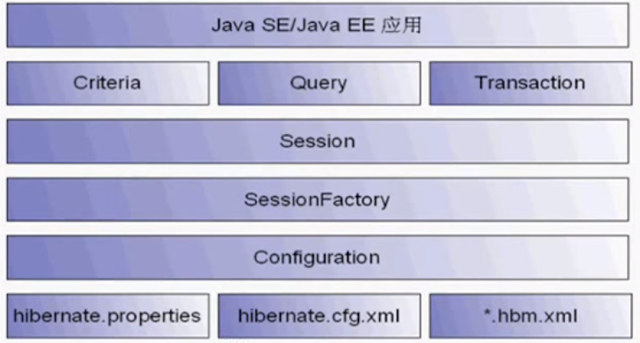
Hibernate API
ORM(Object Relation Mapping)
pojo: plain ordinary java object
A pojo object
Configuration :
Load hibernate.cfg.xml
Manage ORM files
Load driver, url, login
Manage hibernate configs
SessionFactory :
Get session instance from SessionFactory
Initialized when application starts
Occupied large memory, only need one instance for each database, so use singleton for each database
Cache sql statements and some data (session level cache)
Session : generated from sessionFactory
http://gvace.blogspot.com/2015/12/hibernate-session.html
Transaction : transaction is required, so remember to commit
Example
Employee pojo -> employee table
hibernate.cfg.xml
Employee.hmb.xml
hmb.xml file: manage relationship between a pojo class and a table
Employee.java
pojo class, require serialize
Example of using the pojo
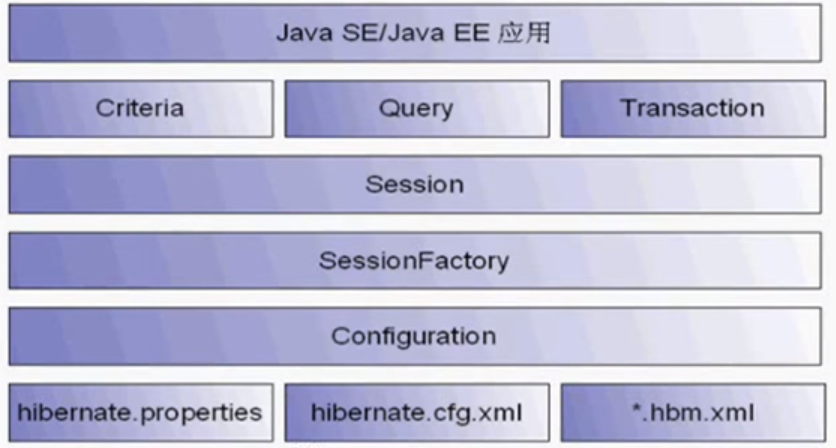
Hibernate API
ORM(Object Relation Mapping)
pojo: plain ordinary java object
A pojo object
- Has at least a primary key field
- other fields
- public get/set functions
- a non-parameter construct function(for hibernate reflection use)
Configuration :
Load hibernate.cfg.xml
Manage ORM files
Load driver, url, login
Manage hibernate configs
SessionFactory :
Get session instance from SessionFactory
Initialized when application starts
Occupied large memory, only need one instance for each database, so use singleton for each database
Cache sql statements and some data (session level cache)
Session : generated from sessionFactory
http://gvace.blogspot.com/2015/12/hibernate-session.html
Transaction : transaction is required, so remember to commit
Example
Employee pojo -> employee table
hibernate.cfg.xml
<?xml version="1.0" encoding="UTF-8"?>
<!DOCTYPE hibernate-configuration PUBLIC
  "-//Hibernate/Hibernate Configuration DTD 3.0//EN"
  "http://hibernate.sourceforge.net/hibernate-configuration-3.0.dtd">
<hibernate-configuration>
    <session-factory>
     <property name="hibernate.dialect">org.hibernate.dialect.MySQLDialect</property>
     <property name="connection.driver_class">com.mysql.jdbc.Driver</property>
     <property name="connection.username">root</property>
     <property name="connection.password">root</property>
     <property name="connection.url">jdbc:mysql://192.168.56.101:3306/hibernate</property>
     <property name="show_sql">true</property>
     <mapping resource="com/gvace/domain/Employee.hbm.xml"/>
    </session-factory>
</hibernate-configuration>
Employee.hmb.xml
hmb.xml file: manage relationship between a pojo class and a table
<?xml version="1.0"?>
<!DOCTYPE hibernate-mapping PUBLIC "-//Hibernate/Hibernate Mapping DTD 3.0//EN"
"http://hibernate.sourceforge.net/hibernate-mapping-3.0.dtd">
<!-- Generated Feb 26, 2016 10:59:22 PM by Hibernate Tools 3.4.0.CR1 -->
<hibernate-mapping>
    <class name="com.gvace.domain.Employee" table="employee">
        <id name="id" type="java.lang.Integer">
            <column name="ID" />
            <generator class="increment" />
        </id>
        <property name="name" type="java.lang.String">
            <column name="NAME" not-null="true"/>
        </property>
        <property name="email" type="java.lang.String">
            <column name="EMAIL" not-null="true" />
        </property>
        <property name="hiredate" type="java.util.Date" >
            <column name="HIREDATE" not-null="true"/>
        </property>
    </class>
</hibernate-mapping>
Employee.java
pojo class, require serialize
package com.gvace.domain;

public class Employee implements Serializable{
 private static final long serialVersionUID = -3742562662542696434L;
 private Integer id;
 private String name;
 private String email;
 private java.util.Date hiredate;
 public Integer getId() {
  return id;
 }
 public void setId(Integer id) {
  this.id = id;
 }
 public String getName() {
  return name;
 }
 public void setName(String name) {
  this.name = name;
 }
 public String getEmail() {
  return email;
 }
 public void setEmail(String email) {
  this.email = email;
 }
 public java.util.Date getHiredate() {
  return hiredate;
 }
 public void setHiredate(java.util.Date hiredate) {
  this.hiredate = hiredate;
 }
 public Employee() {
 }
}
Example of using the pojo
 @Test
 public void test(){
  //1. Initiate config, load config file
  Configuration configuration = new Configuration().configure("hibernate.cfg.xml");
  //2. Create SessionFactory, normally use singleton
  ServiceRegistry serviceRegistry;
  serviceRegistry = new StandardServiceRegistryBuilder().applySettings(configuration.getProperties()).build();
  SessionFactory sessionFactory = configuration.buildSessionFactory(serviceRegistry);
  //3. Create session
  Session session = sessionFactory.openSession();
  //4. Start a transaction
  Transaction transaction = session.beginTransaction();

  //5. Add an employee
  Employee employee = new Employee();

  employee.setName("abc");
  employee.setEmail("abc@abc.com");
  employee.setHiredate(new Date());

  //6. Save
  session.save(employee);

  //7. Commit
  transaction.commit();

  //8. Close session
  session.close();
 }
Wednesday, December 23, 2015
Hibernate Session
Hibernate Session Definition:
An instance which represents a set of operations(crud) on database
A persist related interface
factory.openSession VS factory.getCurrentSession
| factory.openSession | factory.getCurrentSession | |
| Thread | Not related | Using ThreadLocal, bind to current thread |
| When close | require manual close | auto close after commit or rollback |
| When to use | no thread related | want operation in same thread |
| Transaction | not required | require transaction commit |
| Config | not required | <property name="hibernate.current_session_context_class"> thread</property> |
Session Range
<property name="hibernate.current_session_context_class"> thread</property>
hibernate.current_session_context_class: jta, thread, managed, custom.Class
jta: cross databases/hosts, remote server database
thread: local events only, for one single database
thread: local events only, for one single database
Transient
Persistent
Detached
Functions
save
merge
persist
saveOrUpdate
lock
get
load
update
delete
save
merge
persist
saveOrUpdate
lock
get
load
update
delete
session.get VS session.load
| Session.get | Session.load | |
| Return Object | Return target object | Return a proxy of object |
| If result not found | Return null | Throw ObjectNotFoundException |
| When to use | If the result may be null | If the result is sure not be null |
| Cache looking sequence | Session cache(1st level) 2nd level cache SQL return | Session cache(1st level) 2nd level cache return object proxy(lazy) when use object during session: SQL & return when use object out of session: throw Exception |
Session.load is using Lazy fetching mode, if hbm configures lazy to false, session.load will be the same as session.get
2nd level cache needs configuration to enable
If the same result has been checked more frequently, hibernate will move cache from 2nd level to session cache(1st level)
To cancel Lazy fetching mode, config *.hmb.xml, set <class> tag: lazy="false"
To cancel Lazy fetching mode, config *.hmb.xml, set <class> tag: lazy="false"
Subscribe to:
Posts (Atom)